AI Caricature Booth: How It Works, What It Costs and What to Check
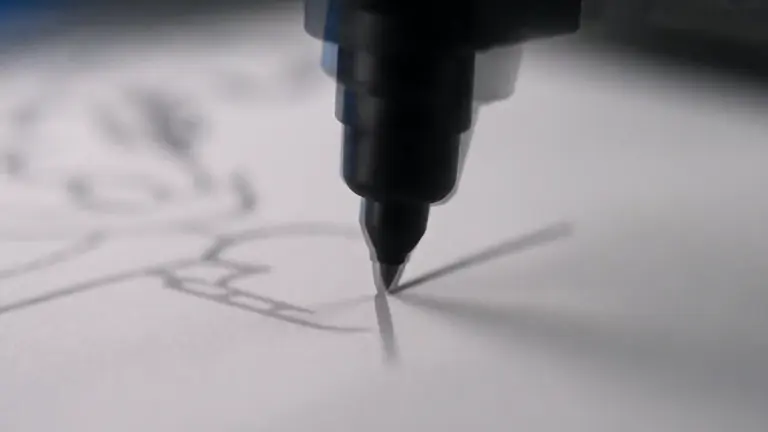
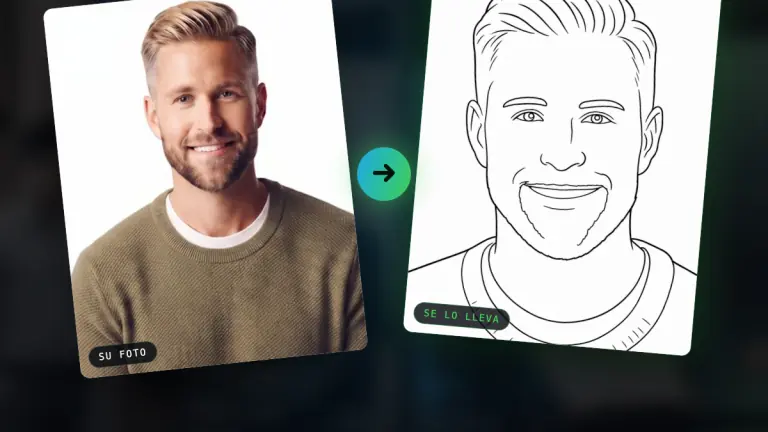
An AI caricature booth is the event format where a robot arm draws each guest's caricature live, in pen, from a photo the guest takes on their own phone. This guide is for the people who run events for a living: photo booth companies, activation agencies and entertainment operators deciding whether to add one. Here is how it works, what it costs per guest and what to ask before you buy.
What Is An AI Caricature Booth?
An AI caricature booth is a complete system made of three parts: a robot arm that holds a pen, AI that turns a face into lines, and software that runs the event and the queue. The guest watches their portrait being drawn on paper and walks away with the original plus a digital copy.
It is not a printer and not an app filter: the drawing is physical, made in front of people, at a pace no human artist can sustain all night.
You will also see it called a digital caricature booth, a robot caricature artist or an AI sketch robot. The names differ, the format is the same: AI decides what gets drawn, the arm decides how.
People also search for this kind of robot as a “sketch bot”. How to tell a good one, starting with a continuous line rather than dots, is in sketch bot for events.
How An AI Caricature Booth Works, From QR Code To Paper
The flow starts with the guest's phone and ends with a sheet of paper in their hand. With PictiaX® it runs in four steps, and the guest only takes part in the first two.
- The guest scans a QR code and takes the photo with their own phone, so nobody queues in front of the robot to be photographed.
- They choose a style and preview it on their screen before it is sent. Anyone who does not like the result retakes it there, not once the paper is already drawn.
- The caricature is generated instantly and appears in the operator's portal, from where it is sent to the arm.
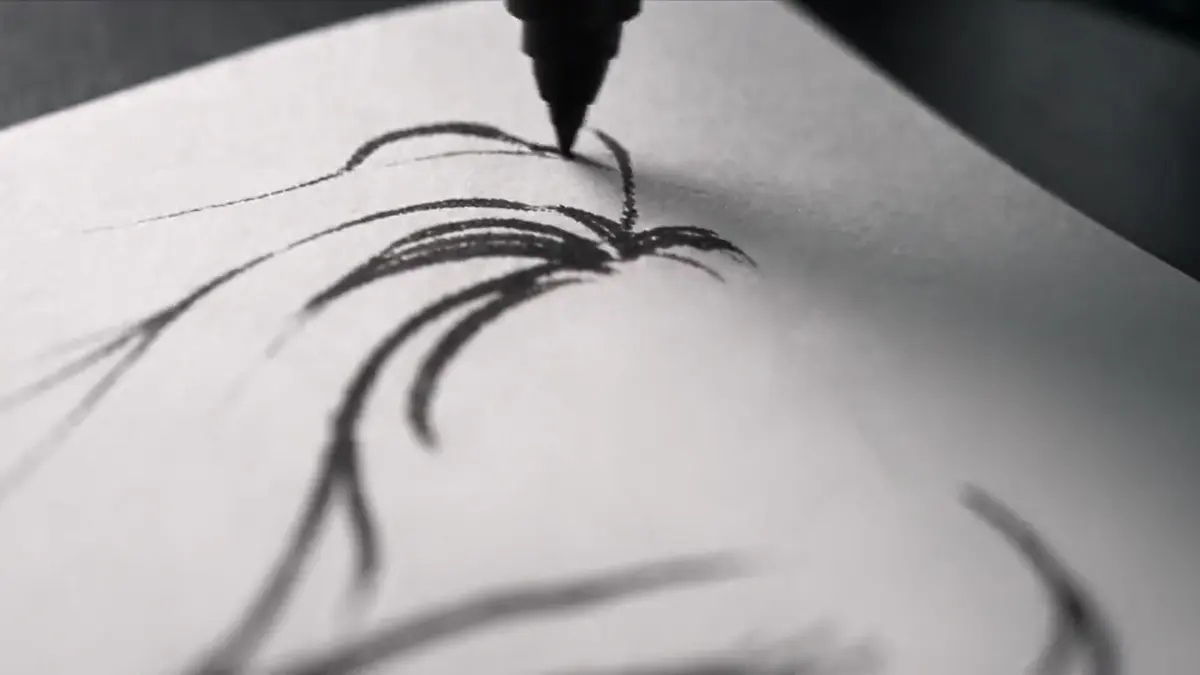
- The arm draws it in pen, in around 60 seconds, and the guest leaves with the paper original and a digital copy to share.
The operator runs everything from the PictiaX® portal, which opens in a browser. The only thing installed is PictiaX® Bridge, on the computer connected to the arm. The full sequence is laid out on what matters when buying a caricature robot.
How Many Guests An Hour: Robot Versus Live Caricaturist
Throughput is the number that decides whether a queue forms and stays good-natured. A live caricaturist typically manages 12 to 20 faces an hour, while an AI caricature booth like PictiaX® runs at around one portrait a minute per arm.
The table below uses rates that caricaturists in London and the South East of England, and in the United States, publish on their own listings. They were checked in October 2026 and are what your client has in mind as the going rate for drawn entertainment.
| Format (published rates) | Price | Faces per hour | Rough cost to the client per guest |
|---|---|---|---|
| Live caricaturist, London, black and white | £320 for 2 hours | 15 to 20 (3 to 4 min each) | About £8 to £11 |
| Walkabout caricaturist, South East England | From £300 for 2 hours | 12 to 15 | About £10 to £12.50 |
| Digital iPad caricaturist, Texas | $250 an hour, 2 hour minimum | 15 to 20 in colour | About $12.50 to $17 |
| Digital caricaturist, Florida | From $200 an hour, 2 hour minimum | Up to 10 in colour | About $20 |
| PictiaX® AI caricature booth | Your price | 50 to 60 per arm | Your variable cost: one PICTICOIN, from €0.10 |
Two readings matter. First, clients already accept paying around £8 to £20 per drawn guest, so a drawn portrait is not a hard sell. Second, the human format caps out: at a 300 guest wedding a single artist reaches a fraction of the room, and adding a second artist doubles the bill.
What An AI Caricature Booth Costs To Buy And To Run
The complete PictiaX® system costs €3,500 including tax, paid once. It includes one robot arm in the black finish, the software with no subscription and no expiry, an account with 2 setups, 500 PICTICOINS (500 portraits) that never expire, two bases (10 × 15 cm and 20 × 15 cm) and a pack of marketing and legal material.
After that the running cost is one PICTICOIN per portrait, from €0.10, with the price dropping as volume grows. There is no monthly fee, no cloud fee and no separate support plan, so a month without events costs nothing. Paper and pens are the only other consumables.
The worked examples on the PictiaX® site put 100 wedding portraits at €12.00 to €17.00 in PICTICOINS, and a two day trade show of 400 portraits at €48.00 to €68.00. The full breakdown, with the three year warranty, is on the buy page.
| Event | Portraits | PICTICOINS spend |
|---|---|---|
| Wedding | 100 | €12.00 to €17.00 |
| Brand activation | 180 | €21.60 to €30.60 |
| Trade show, two days | 400 | €48.00 to €68.00 |
What you charge is your decision and depends on your market. A sensible starting point is the per guest figure your clients already pay for drawn entertainment, multiplied by the number of guests the robot can actually reach.
Six Things To Check Before Buying A Robot Caricature Artist
Most of what goes wrong with a robot caricature artist shows up at the first busy event, not in the demo video. These are the six checks worth making with any supplier, PictiaX® included.
- Likeness. Ask for untouched source photos next to the drawings, including couples, close-ups and pets. If the guest does not recognise themselves, nothing else matters.
- Real speed. Ask for the time per portrait from start to finish, and whether you can trade detail for speed when the queue builds. PictiaX® runs at around 60 seconds and lets you pick the speed.
- Pen line or dots. Some drawing software shades with dots and small circles, and up close it looks machine made. PictiaX® plans the whole route first and draws continuous lines, the way a hand does.
- Branding inside the drawing. A logo stuck in a corner is not the same as a campaign built into the artwork. Check whether you can add the client's logo, colours and two lines of text, such as the couple's names and date.
- Guest data. Find out where photos go, how long they are kept and whether consent is asked before processing. With PictiaX® consent comes first and the original photo is kept for around a day.
- Set-up and transport. Count the cases and the people needed. The PictiaX® arm and both bases fit in a small suitcase, and one person sets it up in about ten minutes.
Also ask what happens when the venue wifi struggles. Generating a portrait needs a connection, but with PictiaX® you can tether to your phone, and if the network drops the queue is kept and pending portraits retry on their own.
Turning A Digital Caricature Booth Into Lead Capture
A digital caricature booth earns more when it captures contacts as well as entertaining. PictiaX® LeadFlow™ lets you choose one of three modes per event: just the experience, capture contacts, or a full campaign with your client's own questions and a report at the end.
The guest opts in before taking part, the data belongs to your client and it downloads when the event ends. That changes the conversation: an attraction competes for the entertainment budget, while an activation that hands over qualified contacts competes for the marketing budget, which is larger.
At weddings you switch capture off; at trade shows you switch it on. Same robot, different product.
What You Need On The Day
An AI caricature booth needs four things: the arm with its bases, paper, a computer you already own and a small table. The camera is the guest's phone, so there is no camera, printer or backdrop to transport.
Everything fits in a car boot without folding the seats down. On site you find a socket, unfold the table, open the portal and create the event. Setting up takes about ten minutes.
Where An AI Caricature Booth Pays Off
The format pays off wherever a queue is an asset and a keepsake outlasts the event. For most operators that means four kinds of booking.
- Weddings, where the couple's names and date go on every portrait and guests leave with a dated keepsake.
- Brand activations and product launches, with the campaign built into the artwork and contacts captured with consent.
- Trade shows and conferences, where the drawing pulls people onto the stand and gives sales a reason to talk.
- Corporate parties and private celebrations, with styles such as superhero, footballer or chef switched on to suit the crowd.
If you already run photo booths, the client list is the same and the set-up is lighter. If you want to understand the software layer behind all this, read our guide to drawing robot software for events.
Frequently Asked Questions
How much does an AI caricature booth cost?
The complete PictiaX® system costs €3,500 including tax, with the robot, the software with no subscription, two bases and 500 portraits. After that each portrait uses one PICTICOIN, from €0.10, and there is no monthly fee.
How many guests can an AI caricature booth draw in an hour?
At around 60 seconds per portrait, one PictiaX® arm draws about 50 to 60 guests an hour. You can run more than one arm at the same event if the queue needs it.
Is a robot caricature as good as one by a live caricaturist?
It is a different product. A live artist brings a personal style at 12 to 20 faces an hour; an AI caricature booth keeps the likeness at around one portrait a minute and puts the client's branding inside every drawing.
Do guests need to download an app?
No. Guests scan a QR code and take the photo with their phone's browser, then receive the portrait on paper and a digital copy.
Can I put my client's logo on the caricatures?
Yes. The logo, colours and two lines of text such as names and a date are built into the artwork on every portrait at that event.
Can I use an AI caricature booth on a robot arm I already own?
Yes. Drawing arms speak G-code, so PictiaX® runs on a range of arm models. The software on its own is quoted on request.