Sketch Bot For Events: What It Is, How It Works And How To Tell A Good One
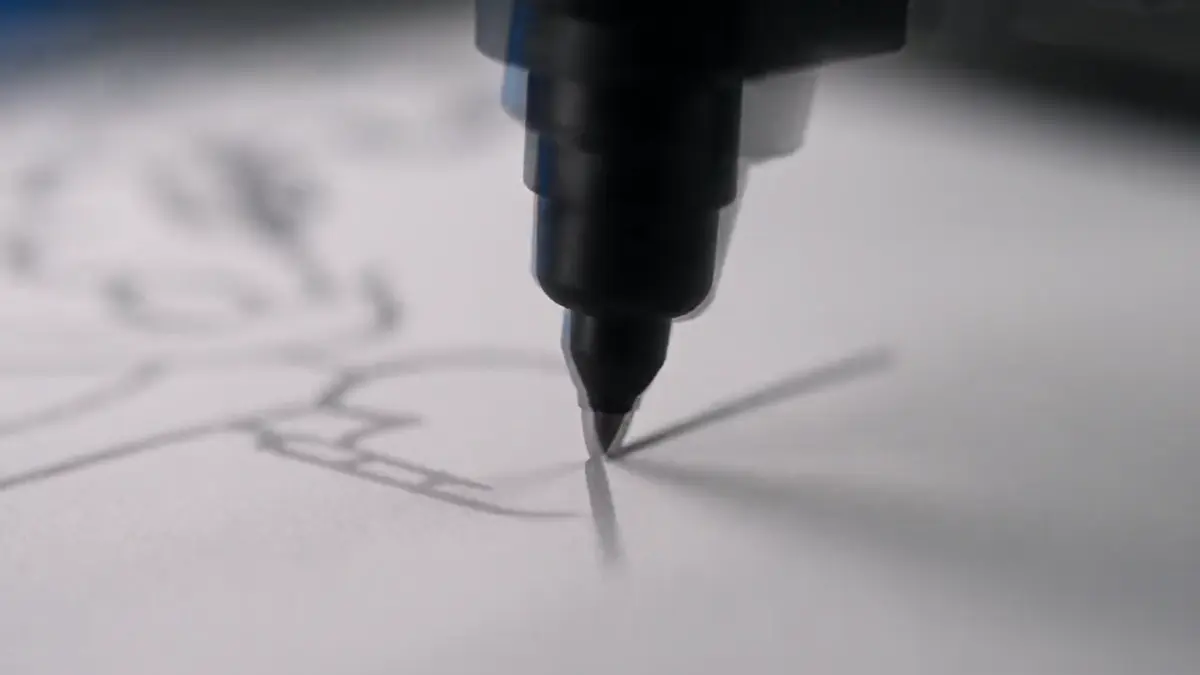
A sketch bot for events is a robot arm that draws guests' portraits live with a real pen, guided by AI that turns a photo into lines. The term has become trade shorthand for any robot that sketches guests, so the machines sold under it vary a great deal. This guide is for photo booth companies and activation agencies weighing one up: how it works, what separates a good one from one that obviously came off a machine, and where it earns its keep.
What Is A Sketch Bot?
A sketch bot is a drawing robot built for events: an arm that holds a pen, AI that turns a guest's face into strokes, and software that runs the queue. The guest watches the portrait appear on paper in front of them and takes the original home.
It is neither a printer nor a phone filter. The drawing is physical, ink on paper made in real time, and that is exactly why people stop, watch and film it.
In the trade the same format also goes by AI sketch robot, drawing robot or robot caricature artist. PictiaX® is a complete system of this kind: the robot arm, the software that runs it and the AI that draws, sold to the operator who then takes it to their own events.
How An AI Sketch Robot Turns A Phone Photo Into Ink
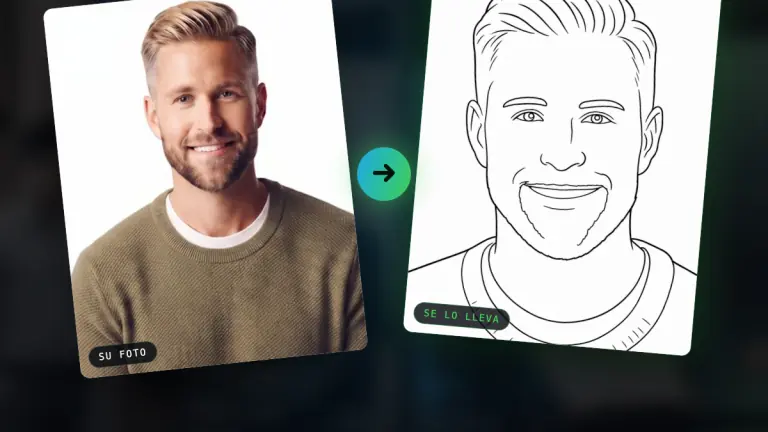
An AI sketch robot works in four steps, and the guest only takes part in the first two. Everything after that is handled by the AI and the arm.
- A photo from the guest's own phone. They scan a QR code, so nobody queues in front of the arm just to be photographed.
- Style and preview. They choose from the styles you have switched on for that event and see the result on their screen before it is sent. Anyone who does not recognise themselves retakes it there, not once the paper is drawn.
- AI and route. The PictiaX® AI turns the face into lines and plans the arm's whole route before the pen touches the paper.
- Pen on paper. The arm draws the portrait in around 60 seconds, and the guest leaves with the original plus a digital copy to share.
The operator runs the event from the PictiaX® portal, which opens in a browser. The only thing installed is PictiaX® Bridge, on the computer connected to the arm. What each software layer does, from face analysis to route planning, is broken down in our guide to drawing robot software for events.
Continuous Line Or Dots: How To Tell A Good Sketch Bot
The fastest way to judge a sketch bot is to hold a finished drawing 20 centimetres from your face. A good one draws in continuous lines, the way a hand does. A weaker one fills shadows and hair with dots and small circles, and up close you can tell straight away that a machine did it.
That difference is decided by the software, not the arm. Shading with dots is the simpler approach: tones become a pattern of marks. Drawing in lines means the AI has to decide where the contour of a cheek, a curl or a collar really runs, and then join those strokes into a route the arm can follow.
PictiaX® plans the whole route before it starts, in one continuous line, so the arm does not wander back and forth. That is what delivers a portrait in around 60 seconds without losing detail, and what makes the result look drawn rather than plotted.
It matters commercially, not only aesthetically. A portrait that looks hand drawn ends up on the fridge or the office wall, with your client's logo on it. One that looks like a printout ends up in the bin, and the brand goes with it. When you assess any drawing robot, ask the supplier for these:
- Close-ups of finished sheets, not just video of the arm moving.
- Untouched source photos next to the drawings, including couples, close-ups and pets.
- Drawings with plenty of hair and shadow, which is where dot shading shows most.
- The same portrait at a fast setting and a detailed one, so you know what you lose when the queue builds.
You can also test the engine on your own face: upload a photo on the PictiaX® home page and the caricature arrives by email, made with the same AI the robot uses.
Eight Things To Check Before You Buy
Eight points decide whether a drawing robot holds up at a busy event, and every one of them can be checked before you spend anything. This is how they look side by side.
| What to check | Why it matters | How it works in PictiaX® |
|---|---|---|
| The line | Dots and small circles look machine made up close | Continuous lines, with the route planned before the pen moves |
| Likeness | If the guest does not recognise themselves, nothing else counts | Our own model, trained to keep the likeness, plus a preview on the guest's phone |
| Speed | Two or three minutes per portrait turns a queue into a wait | Around 60 seconds, 50 to 60 portraits an hour per arm, and you pick the speed |
| Your client's brand | A logo in a corner is decoration; inside the artwork it is sponsorship | Logo, colours and two lines of your own text built into every portrait |
| Contact capture | Contacts given with consent are what a brand pays for | LeadFlow™: just the experience, capture contacts or a full campaign, exported after the event |
| Network failure | Venue wifi is the most common weak point on the day | Tether to your phone; if the network drops the queue is saved and pending portraits retry on their own |
| Cost per portrait | Subscriptions eat the margin in quiet months | One PICTICOIN per portrait, from €0.10, no monthly fee and a balance that never expires |
| Warranty | One year is the norm with drawing robots | Three years, shipping both ways covered within the EU and a replacement unit if an event is due within seven days |
The longer list of what tends to go wrong at events, and how each point is handled, is on what matters when buying a caricature robot.
Sketch Bot Or Live Caricaturist: What Clients Already Pay
A live caricaturist and a drawing robot sell different things: an artist's personal style at a human pace, against likeness and branding at around one portrait a minute. Both sit in the same budget line, and that budget already exists.
Published rates show how clients value a drawing robot at an event. A London event agency lists an AI sketch robot act from £2,751 plus VAT and travel, for four hours of live sketching with one robot and an operator. A company in North Carolina prices its robot caricature experience at $3,995 to $10,000 per event and states that each of its robots takes about 3 to 4 minutes per portrait, so it runs four of them to pass 60 an hour. Both were checked in October 2026.
Two readings matter for an operator. First, the market already treats a drawing robot as a premium booking, not an add on. Second, speed per arm decides how much kit you haul: one PictiaX® arm draws 50 to 60 portraits an hour, close to what slower robots need a fleet of four to reach.
Live caricaturists work at a human pace by definition. Their published rates and faces per hour in London and the US are compared in our AI caricature booth guide.
What The Robot Costs, And What Each Portrait Costs
The complete PictiaX® system costs €3,500 including tax, paid once. It includes the robot arm in the black finish, the software with no subscription and no expiry, 500 PICTICOINS (500 portraits) that never expire, two bases of 10 × 15 cm and 20 × 15 cm, PictiaX® Academy and the three year warranty.
After that, each portrait uses one PICTICOIN, from €0.10, and the price drops as volume grows. There is no monthly software or cloud fee, so a month without events costs nothing. If you already own a drawing arm, the software is quoted on its own, because every drawing arm speaks G-code.
| Event | Portraits | PICTICOINS spend | Price in the PictiaX® worked examples |
|---|---|---|---|
| Wedding | 100 | €12.00 to €17.00 | €600 to €1,200 |
| Brand activation | 180 | €21.60 to €30.60 | €600 to €3,000 |
| Trade show, two days | 400 | €48.00 to €68.00 | €2,500 to €4,000 |
The last column comes from the worked examples PictiaX® publishes; what you actually charge depends on your market and your clients. Everything in the box is listed on the buy page.
On The Day: Set-Up, Network And Queue
One person sets up a PictiaX® arm in about ten minutes: a socket, a folding table, the arm on its base and a computer you already own. The arm and both bases fit in a small suitcase, and the camera is the guest's own phone.
Generating each portrait needs a connection, as with any AI system, but you do not depend on the venue's wifi. You can tether to your phone, and if the network drops for a moment the queue is saved and anything pending retries on its own when it comes back. No portrait is lost and nobody is asked to start again.
The queue sets the limit, not the robot. At 50 to 60 portraits an hour per arm, one arm suits a wedding or a quiet stand. At a busy trade show you run a second, on the same licence, which covers up to six arms. When the line grows you drop the detail and raise the speed; when it is quiet the line comes out finer.
Where A Drawing Robot Earns Its Keep
A drawing robot earns its keep wherever a queue is an asset and a keepsake outlasts the event. For most operators that means four kinds of booking.
- Weddings, where you type the couple's names and the date into the portal and the arm draws them on every portrait, so each guest takes home a dated keepsake.
- Brand activations and product launches, with the campaign's colours, typeface and message inside the artwork, and contacts captured with consent through LeadFlow™.
- Trade shows and conferences, where watching the pen move pulls people onto the stand and gives sales a reason to start a conversation.
- Corporate parties and celebrations, with styles such as superhero, footballer or chef switched on, a custom style written in a minute, or FutureFlow™, where the arm writes a playful future with the guest's name for the same single PICTICOIN.
If you already run photo booths, the clients and venues are the same and the kit is lighter. The robot is one more line on the quote you already send.
Frequently Asked Questions
What is a sketch bot?
A sketch bot is a drawing robot for events: an arm that draws each guest's portrait in pen, live, from a photo that AI has turned into lines. The guest keeps the paper original and gets a digital copy.
How much does a sketch bot cost?
A complete sketch bot system such as PictiaX® costs €3,500 including tax, with the robot, the software with no subscription, 500 portraits and a three year warranty. After that each portrait uses one PICTICOIN, from €0.10.
How long does it take to draw one portrait?
PictiaX® takes around 60 seconds per portrait, which is 50 to 60 an hour per arm. You can lower the detail to speed up when the queue builds.
Sketch bot or caricaturist: which should I offer?
They are different products. An artist sells a personal style at a human pace; a sketch bot keeps the likeness at around one portrait a minute and puts your client's brand inside every drawing, which is what lets you sell it as a brand activation.
Does it need the venue's wifi?
It needs a connection to generate portraits, but not the venue's wifi: you can tether to your phone. If the network drops, the queue is saved and pending portraits retry on their own.
Can I put my client's logo on the drawings?
Yes. The logo, colours and two lines of your own text, such as names and a date, are built into the artwork of every portrait at that event.